Caring for Sacred Image Frames: Colour Meaning and Safe Cleaning
June 27, 2026 · 5 min read
เขียนโดย Yongyut Sangpho

สรุปสั้น
Frames for sacred images — Buddhist monks, amulets, or religious objects — should use colours that convey reverence and auspiciousness. Gold frames are the most traditional choice in Thai culture, symbolising faith and prestige. Deep red or natural dark wood frames are also common, projecting warmth and respect. Avoid solid black frames for Buddhist images unless they suit a Chinese-style shrine aesthetic. To clean wooden frames, use a damp cloth wrung out well and wipe along the grain. For glass or acrylic, use a dry microfibre cloth or alcohol-free glass cleaner. Position frames away from direct sunlight and rooms with humidity above 70% to maximise the lifespan of both the frame and the image inside.
A customer called with a question I hear often. She had a framed image of a Buddha rupa that had hung on the family altar since her grandparents' time. Dust had collected in the carved details of the frame, and the glass had gone hazy enough that the image inside was hard to see clearly. She wanted to know whether she could clean it herself, and what to use.
I told her to stop before starting and asked whether the front panel was acrylic or real glass. Because everything depends on that answer. Cleaning a sacred frame is not just about removing dirt — it also means not damaging the image or the materials in the process.
Frame colour and the meanings people choose
Before the cleaning question, I want to cover something customers ask just as often: which colour frame suits a sacred image or auspicious object. In the framing trade and in long-standing custom, each colour carries associations that most people still follow.
| Frame colour | Meaning | Best suited for |
|---|---|---|
| Gold | Prosperity, sanctity, dignity | Buddha images, royal portraits — the most popular choice |
| Deep red | Good fortune, vitality, stability | Amulets, deity images |
| Black | Calm authority, modern restraint | Minimalist frames, contemporary homes |
| Brown / wood | Warmth, solidity | Classical sacred images, warm-toned rooms |
| White / cream | Purity, serenity | Minimalist frames, Scandinavian-style interiors |
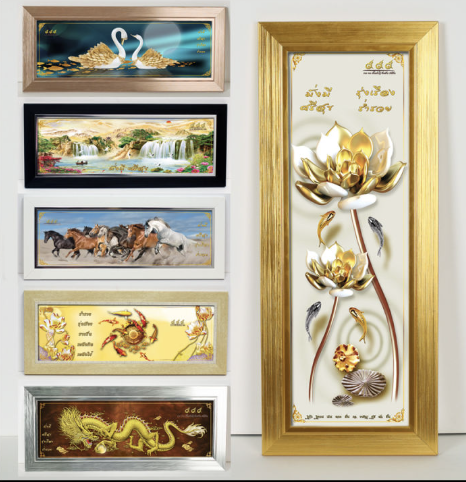
If you are unsure where to start, gold is the hardest choice to get wrong for sacred images. Beyond the meaning, gold tone works well with the colours found in most Buddha images and looks dignified regardless of the room's overall style.
Cleaning glass correctly
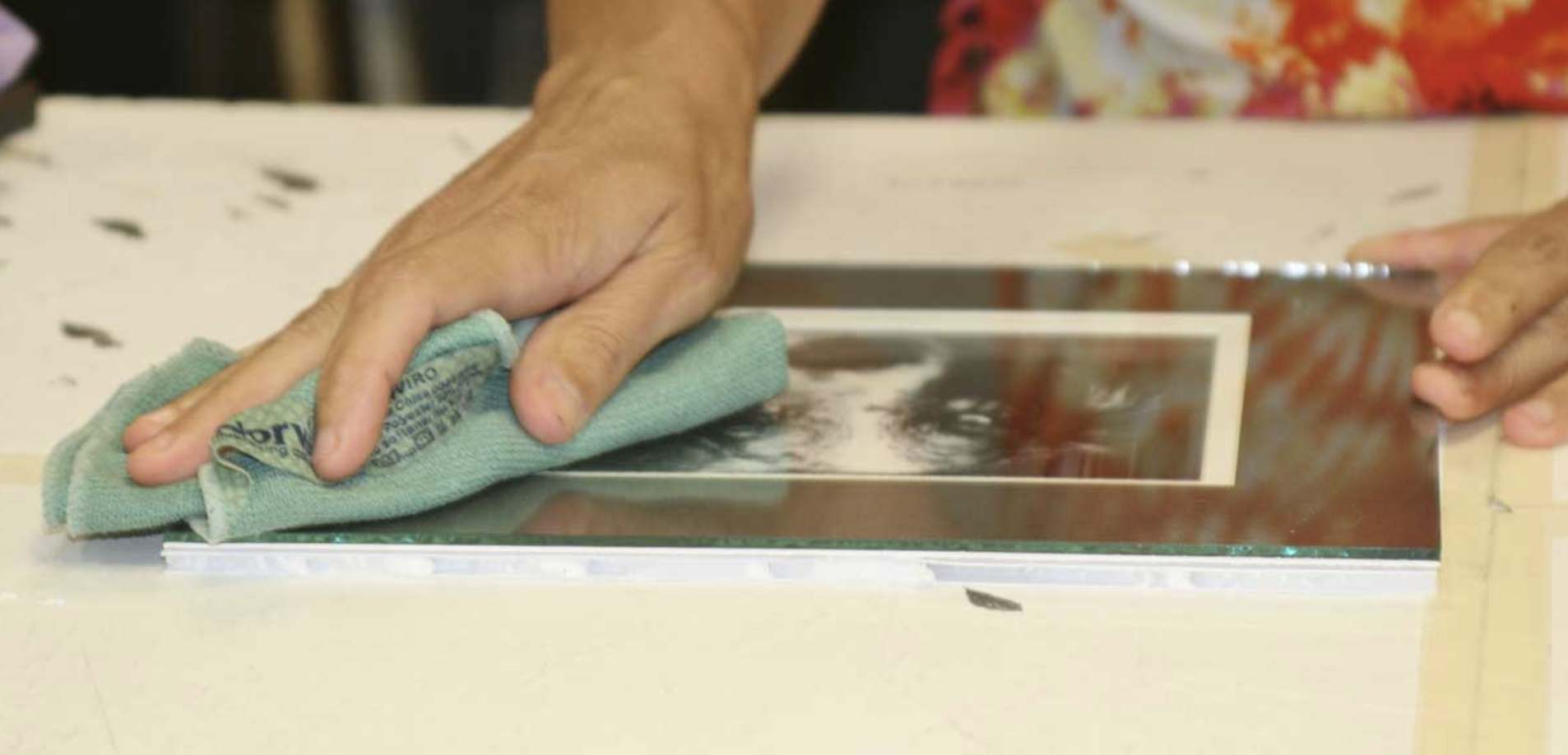
The most important thing before cleaning is knowing whether the front panel is real glass or acrylic, because the method and the products are completely different. Real glass can be cleaned with a standard glass cleaner, but it must be an ammonia-free formula. Ammonia degrades the UV-protective coating on specialist glass. Spray the cleaner onto a microfibre cloth first, not directly onto the glass, then wipe gently and follow with a dry clean cloth.
Acrylic requires more care than glass
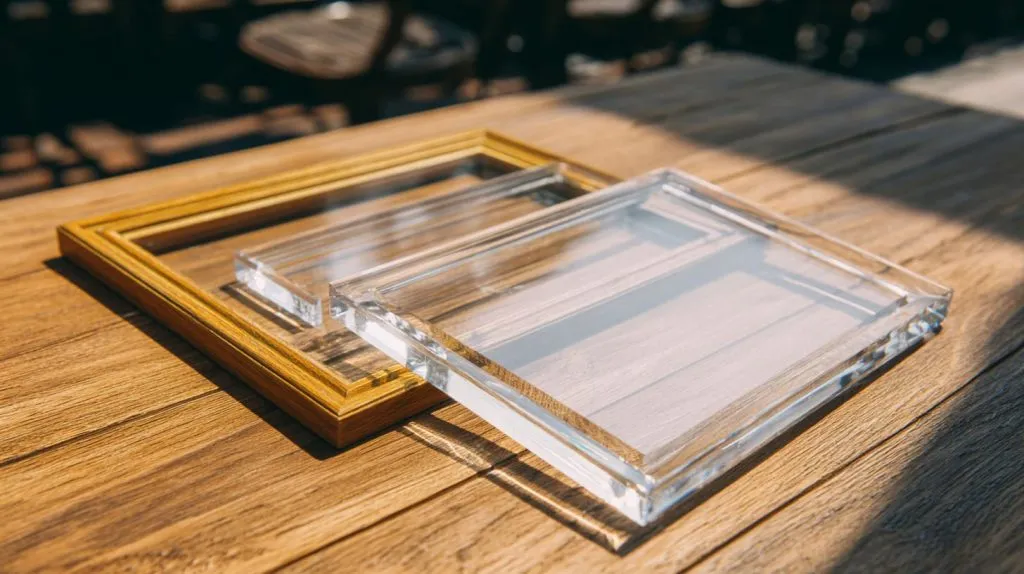
Acrylic is noticeably more sensitive to chemicals than real glass. Nearly every standard glass cleaner sold in shops contains ammonia, which will permanently cloud acrylic. Once it fogs, there is no way to restore clarity. For acrylic, use a product made specifically for acrylic, or a small amount of mild baby soap in warm water. Wipe only with a microfibre cloth and only with light pressure. Tissue paper looks soft but has fibres stiff enough to scratch acrylic.
Wood frames and carved details
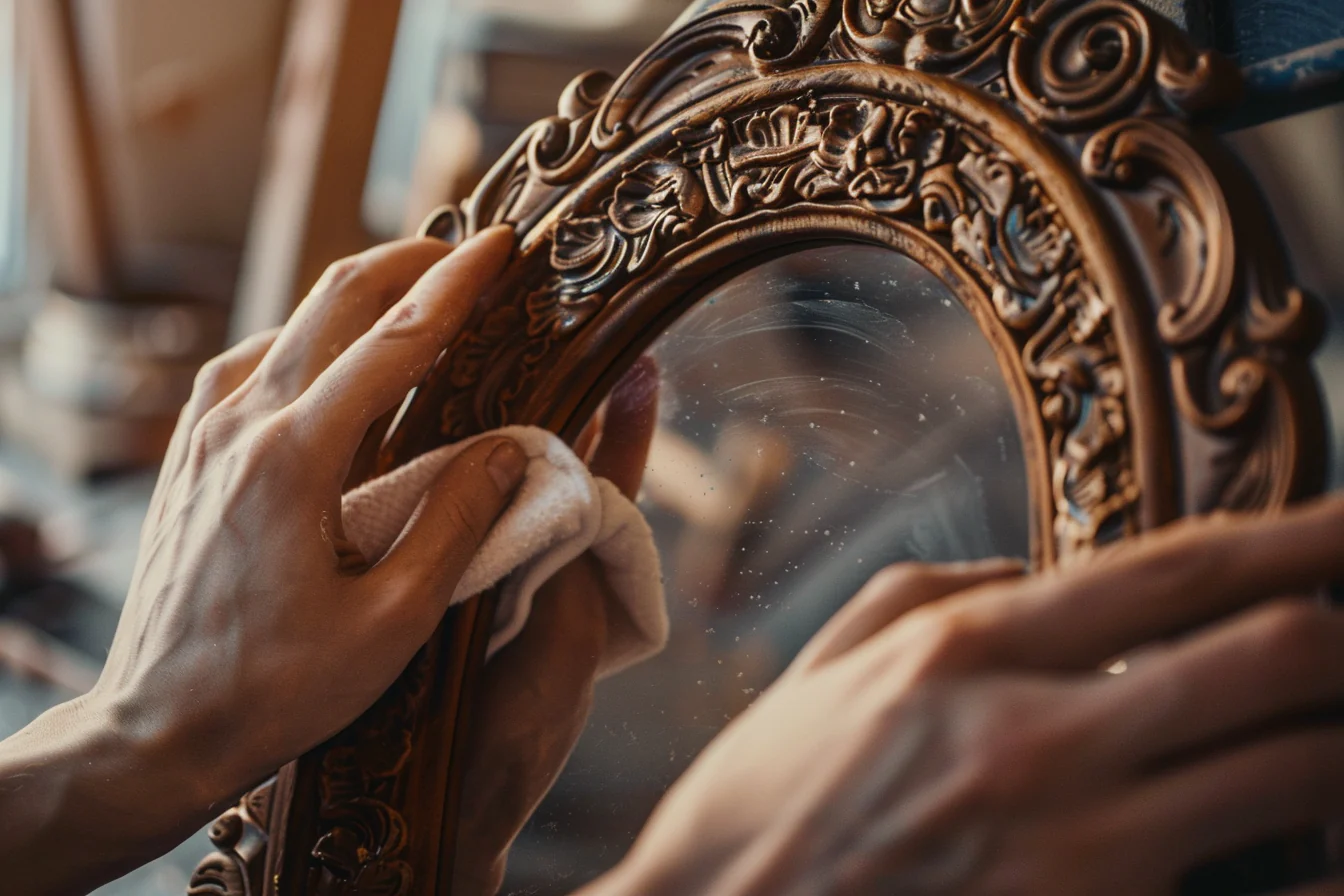
Wood frames, including Louis-style frames with dense carved patterns, accumulate dust in the grooves where cloth cannot reach. A soft-bristle brush works well for dislodging dust from carvings first. Then wipe smooth surfaces with a dry microfibre cloth. For a deeper clean, use a cloth very lightly dampened with furniture cleaner, wiped along the wood grain. Do not leave moisture sitting on wood — it can lift the finish or cause the wood to swell.
What must never be done
I have repaired frames damaged by incorrect cleaning more times than I can count. The most common mistake is spraying cleaner directly onto the frame while it is still on the wall — the liquid runs down along the edge of the glass, gets inside the frame, and leaves the image damp. Others use rough cloth or tissue paper on acrylic, scrub with hard pressure, use stiff brushes, or clean far more often than necessary. Ordinary dust that has settled over a few weeks does not damage the image. Cleaning the wrong way causes permanent damage.
If a sacred frame at home has a problem you are not sure how to handle, send a photo via LINE. I will look at it and suggest the safest approach for that specific frame.
Need a frame? Just ask us
Send a photo on LINE and we reply within one hour during opening times