What Is a Floating Frame? A Complete Guide Before You Order
June 28, 2026 · 6 min read
เขียนโดย Yongyut Sangpho
สรุปสั้น
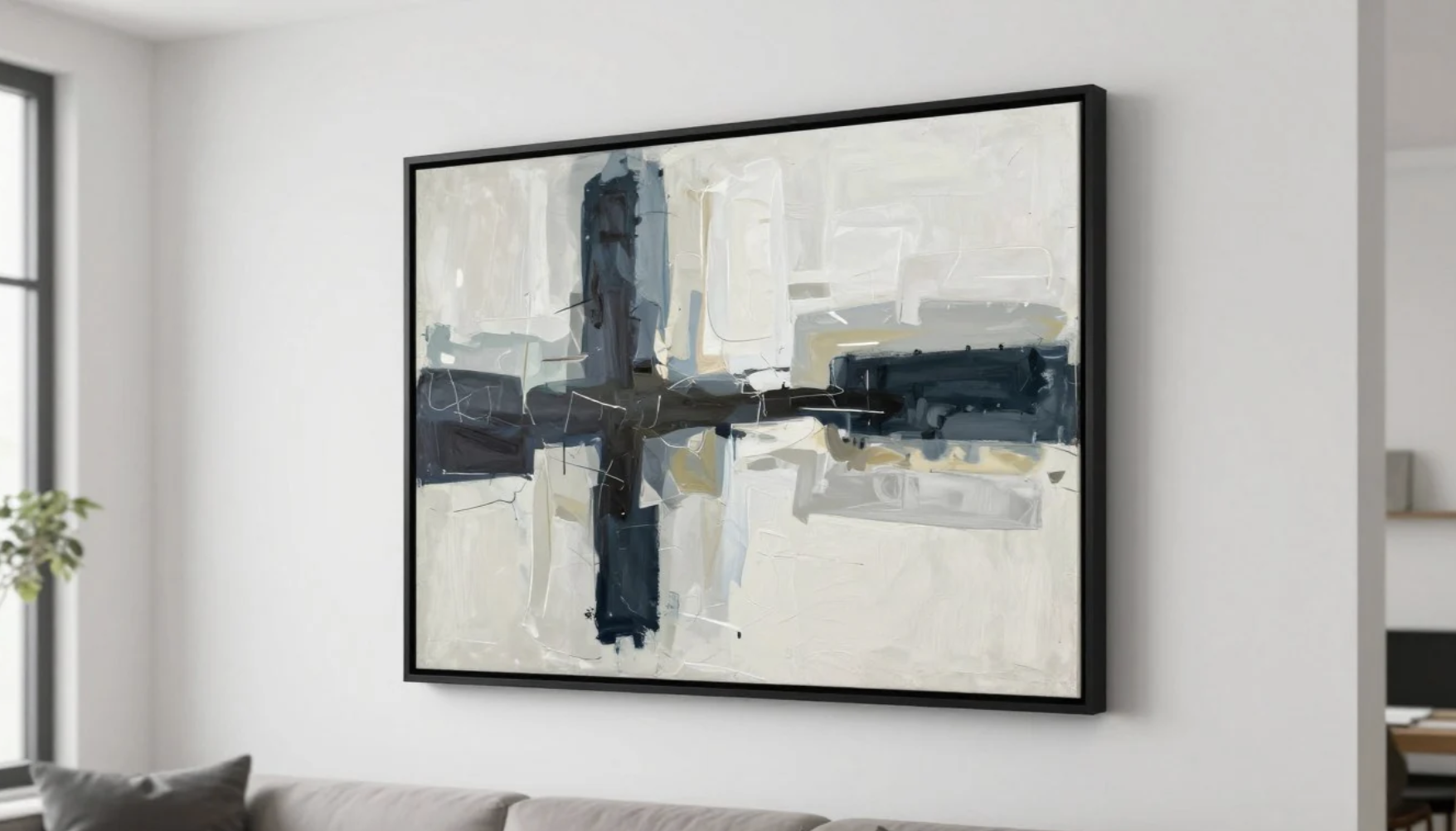
A floating frame is a frame designed so that the canvas or artwork appears to float in the centre, with a visible gap of 3–8 mm between the image edge and the inner frame wall. This creates dimension and a contemporary gallery look. Floating frames work best with canvas prints, wood-mounted photos, and artworks where the edges are attractive and meant to be seen — do not use them with standard photographs or paper that needs a mat board. Aluminium float frames in black or silver cost 500–1,200 THB, while natural wood versions range from 800–2,000 THB for an A4-size canvas. The frame must match the canvas dimensions exactly on all four sides — always measure the canvas before ordering.
Customers come in and say the same thing fairly often: I want something modern, not heavy, no ornate details — like the frames you see in galleries. My answer is always a floating frame.
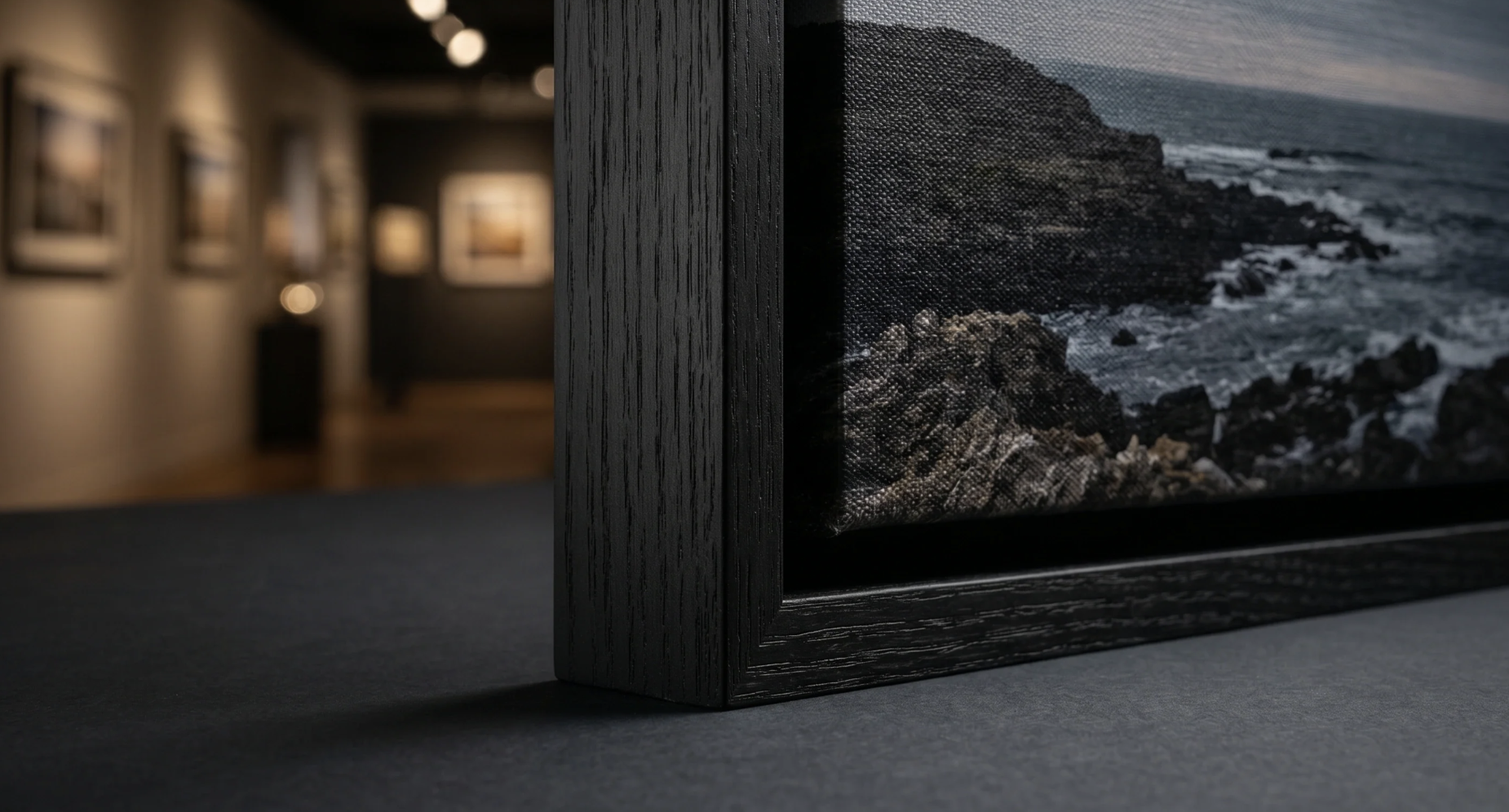
A floating frame is designed so the artwork appears to hover in the centre of the frame, with a gap of roughly three to ten millimetres all around. There is no mat board pressing in from the edges. The result is that the image stands out, the frame never competes with the artwork inside it, and that small gap creates a subtle shadow that gives the piece natural depth and weight.
What does it work with
Floating frames are not right for everything, but they are exceptional for certain types of work.
| Artwork type | Good fit? | Reason |
|---|---|---|
| Canvas print | Excellent | Float framing is the standard format for canvas |
| High-quality giclée print | Excellent | Looks premium and contemporary |
| Large-format photograph | Good | Creates a gallery feel |
| Paper artwork | Moderate | Needs extra gap management and spacers |
| Sports jersey / 3D collectibles | Not suitable | Use a shadow box instead |
| Sacred images / religious items | Not recommended | Lacks the gravitas the subject needs |
The different types of floating frame
The most common is the Standard Float, where the artwork attaches to a backing board with a visible gap around all four edges — the format most people picture. Deep Float or Gallery Float has more depth, which works well with thick canvases or when you want the piece to feel especially prominent. Reverse Float hides the frame completely behind the artwork so nothing is visible from the front at all — the most minimal option available. Double Float stacks two layers of gap, creating exceptional dimensionality that reads well from a distance.
Which materials to choose
| Material | Recommended? | Reason |
|---|---|---|
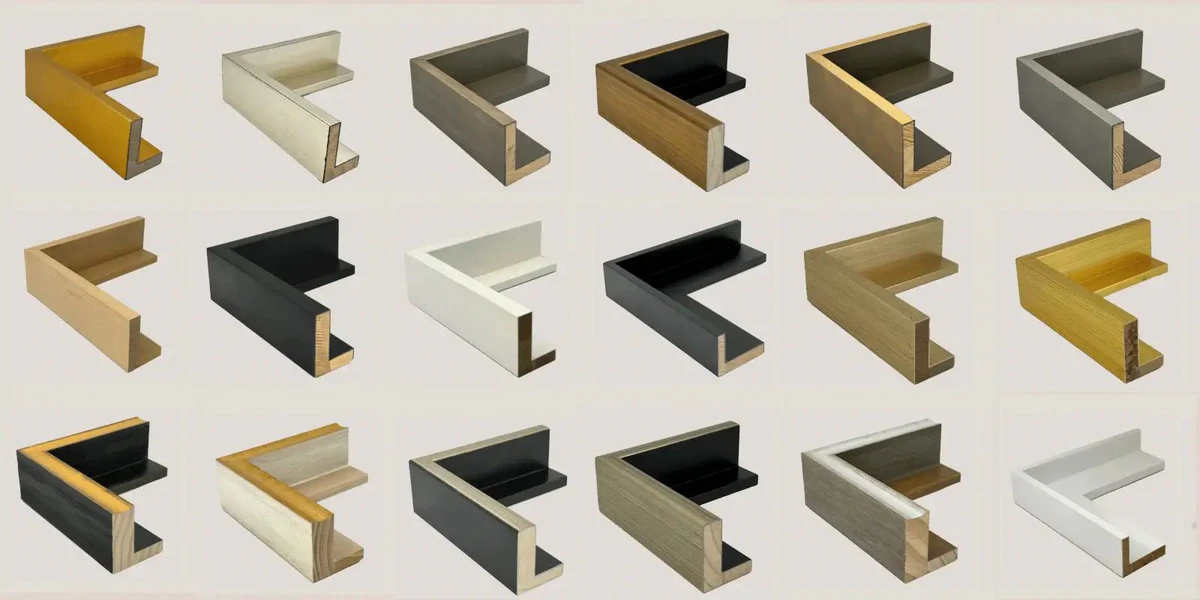
| Solid wood | Yes | Premium look, long-lasting |
| MDF with wood-grain film | Acceptable | Lower cost but some versions warp with moisture |
| Aluminium | Yes | Contemporary look, lightweight |
| UV glass or acrylic | Essential | Always use if hanging where there is natural light |
How it compares to other frame types
| Factor | Floating frame | Standard frame | Shadow box |
|---|---|---|---|
| Modern feel | Very high | Moderate | Moderate |
| Depth / dimension | Gap effect | Flat | Deep |
| Best for canvas | Yes | Acceptable | Acceptable |
| Price | Mid to high | Lower | High |
| Artwork preservation | Good (with UV) | Good | Very good |
What to sort out before ordering
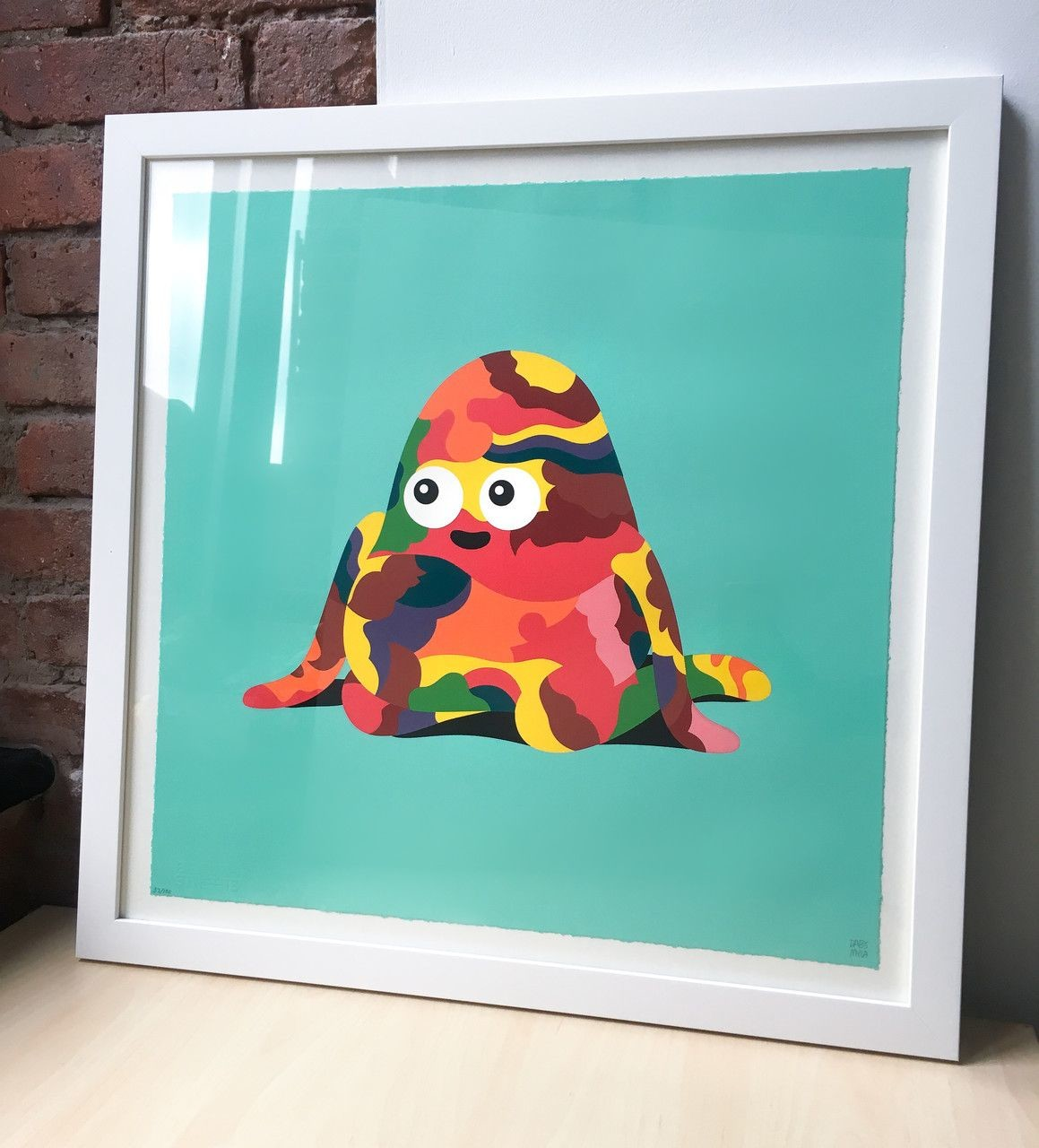
The gap between image and frame needs to be calculated carefully — too wide and the floating effect disappears, too narrow and the image looks cramped. Some canvases are thicker than standard, so always tell the framer the canvas depth before ordering. The artwork must be mounted securely with no movement, as even slight shifting makes the gap look uneven. For rooms with significant natural light, UV-protective glass or acrylic is strongly recommended.
Issaraphap Frame Shop makes floating frames in Standard, Deep Float, and Reverse Float styles. Send us your image dimensions and artwork type (canvas / fine art print / photograph) and we will advise from there.
Need a frame? Just ask us
Send a photo on LINE and we reply within one hour during opening times